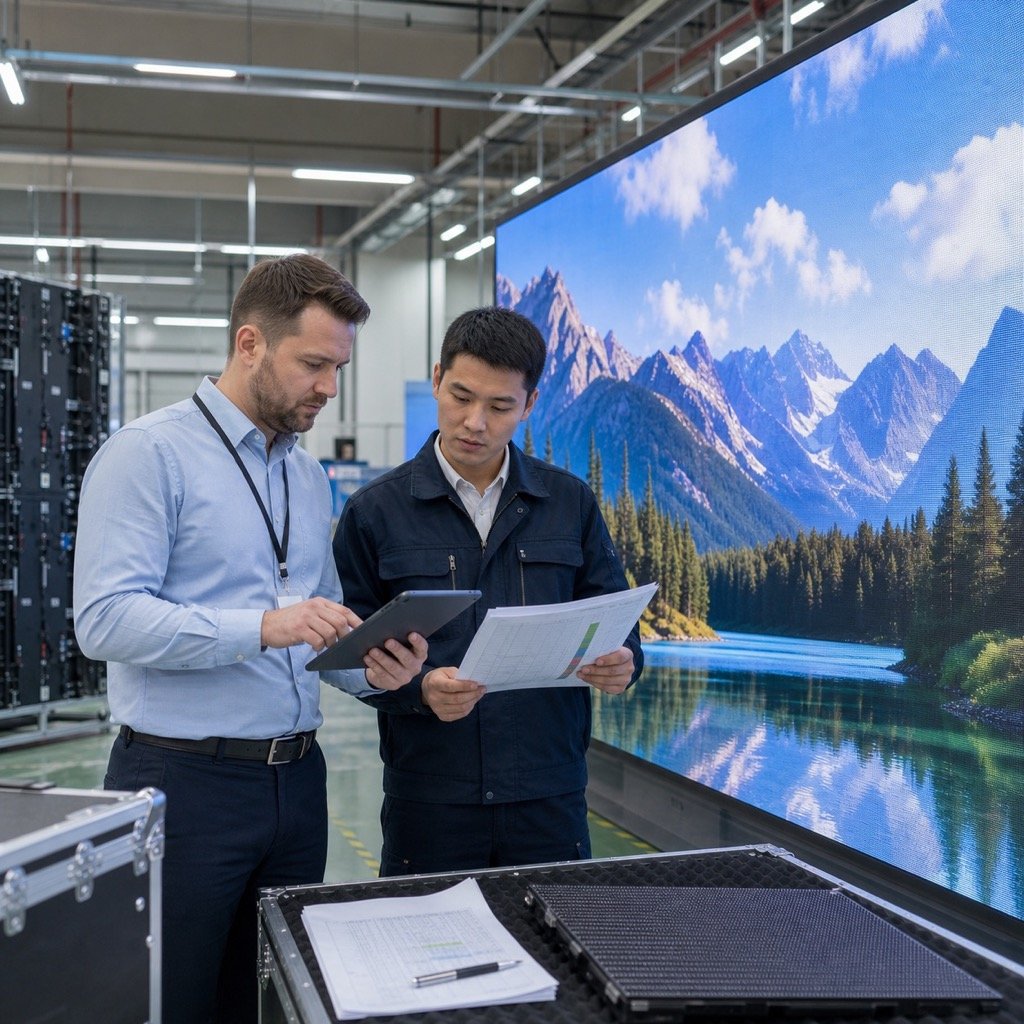
When you buy an LED display from overseas, the most nervous moment is usually not placing the order. It is the waiting part after production starts.
You may be thinking: Is the screen being built correctly? Will the color look consistent? Are the spare parts included? Will the cabinets arrive safely? These are normal questions, especially for B2B buyers, AV integrators, event companies, contractors, and resellers.
The good news is that you do not need to guess. Before shipment, you can ask the LED display supplier for a simple but useful quality check. It does not need to be complicated. You just need to know what to confirm.
Here is a practical LED display quality check list you can use before the goods leave the factory.
Quick answer: what should buyers check before shipment?
Before shipment, ask your LED display supplier to confirm these points:
- Final screen size, cabinet quantity, and pixel pitch
- LED module model, cabinet design, and service method
- Full screen aging test or module/cabinet aging test
- Brightness, color consistency, grayscale, and dead pixel inspection
- Control system, receiving cards, sending equipment, and cables
- Spare modules, power supplies, receiving cards, and accessories
- Packing method, case quantity, labels, and protection
- Photos or videos before packing
- Final packing list and shipping documents
If your supplier can share clear photos, videos, and a packing list, you will feel much more confident before paying the balance or arranging shipment.
1. Confirm the screen configuration first
Start with the basics. Before looking at test videos, make sure the product matches the order.
Check the final screen size, pixel pitch, cabinet quantity, cabinet size, and installation direction. For example, a P2.5 indoor LED video wall and a P3.91 rental LED display may both look good in photos, but they are not the same project.
Ask the supplier to confirm:
- Pixel pitch
- Cabinet size and quantity
- Final screen width and height
- Front service or rear service
- Indoor or outdoor version
- Refresh rate and brightness level
This sounds simple, but it prevents a lot of confusion. If the wrong cabinet size or service method is shipped, fixing it later can be expensive.
2. Ask for aging test photos or videos
Aging test is one of the most important checks before shipment. It means the LED modules or cabinets run for a period of time under power, so the factory can spot obvious issues before packing.
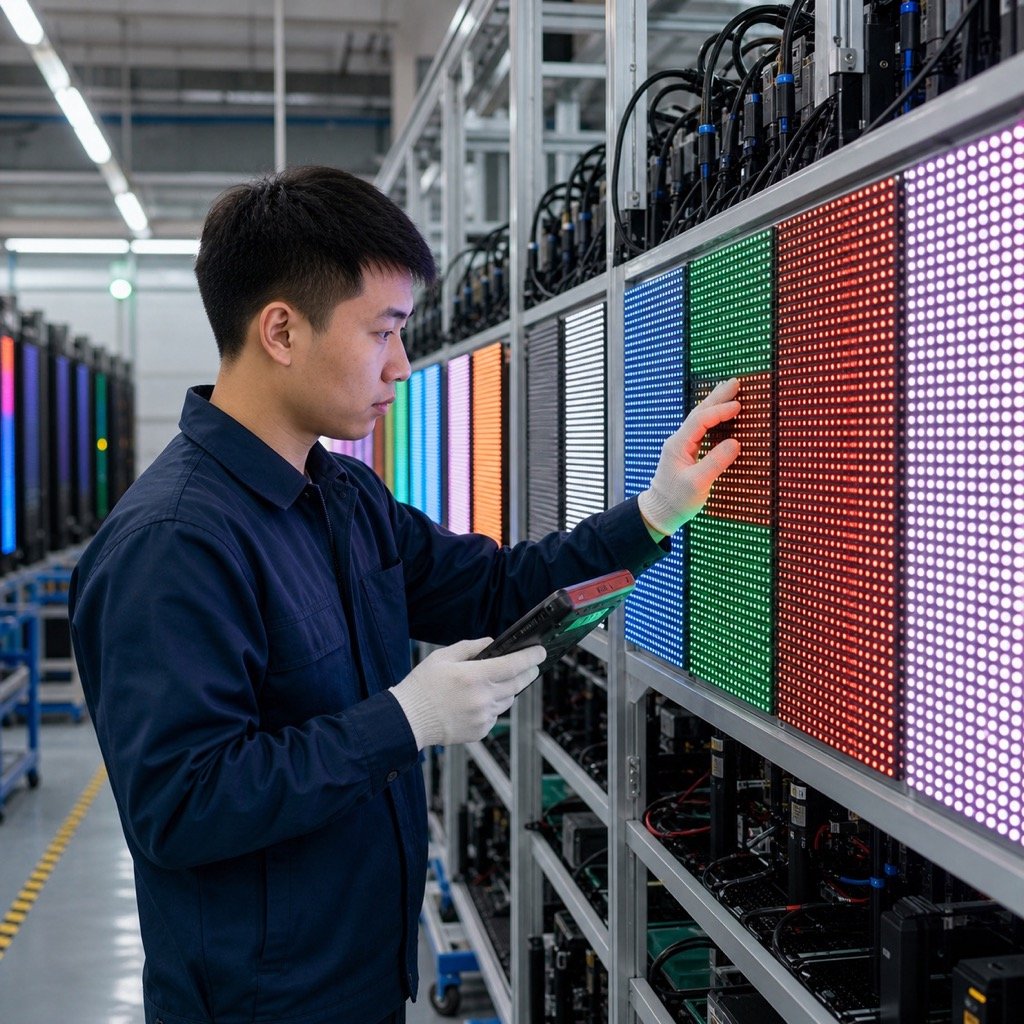
For a fixed installation project, the supplier may test cabinets or assemble a partial/full screen. For rental LED displays, they may test cabinets and modules before packing into flight cases.
When you ask for a test video, do not only ask, “Can you send a video?” Be a little more specific:
Please send a short aging test video showing the LED modules or cabinets running red, green, blue, white, and video content before packing.
That request is clear, easy for the factory to understand, and useful for your own review.
3. Look for dead pixels and uneven brightness
In LED display projects, tiny issues can become very noticeable after installation. A few bad pixels, dark modules, or uneven brightness may not look serious in a factory photo, but they can stand out on a large screen.
Ask the supplier to check solid color screens. Red, green, blue, white, and black tests can reveal different problems. A video test is useful too, but solid colors make it easier to see dead pixels and brightness differences.
What should you look for?
- Obvious dead pixels or bright dots
- One module looking darker than nearby modules
- Color blocks that do not match
- Lines, flicker, or unstable areas
- Cabinet gaps or uneven surface alignment
You do not need to inspect like a factory engineer. Just ask for clear photos and videos. If something looks strange, mark it and ask the supplier to explain.
4. Check brightness and refresh rate for the real use case
Quality is not only about whether the LED screen turns on. It also needs to fit the project.
For outdoor LED displays, brightness is a big topic. The screen must be bright enough for daytime visibility. It also needs proper waterproof design and heat control.
For indoor LED displays, too much brightness can be uncomfortable. You may care more about close-view clarity, smooth grayscale, color consistency, and clean cabinet alignment.
For events, studios, churches, or conference rooms where cameras are used, refresh rate matters. If the refresh rate is too low, the LED screen may look fine to the eye but flicker on camera.
So before shipment, ask your supplier to confirm the specs that matter to your application, not just a generic spec sheet.
5. Confirm the control system and accessories
This is where many buyers get surprised. The LED display price may include cabinets, but the final project also needs control equipment, cables, power parts, spare parts, and sometimes structure accessories.
Before shipment, check whether these are included:
- Sending box or video processor
- Receiving cards
- Power cables and signal cables
- Spare LED modules
- Spare power supplies
- Spare receiving cards
- Mounting accessories or locks
- Flight cases or plywood cases
A good supplier should provide a packing list. Read it before shipment. If something is missing, it is much easier to fix while the goods are still in the factory.
6. Ask for cabinet and module close-up photos
Wide photos are nice, but close-up photos are useful. Ask for close-ups of the LED module surface, cabinet back, power supply area, receiving card area, cabinet locks, handles, and cable connectors.
This helps you confirm the build quality and maintenance design. It is especially helpful for rental LED displays because cabinets will be moved, stacked, locked, and unlocked many times.
For fixed indoor projects, close-up photos help you check whether the cabinet design matches front maintenance, wall mounting, or other installation requirements.
7. Do not skip packing inspection
A screen can pass every electrical test and still get damaged during transport if packing is weak. That is why packing inspection matters for overseas B2B orders.
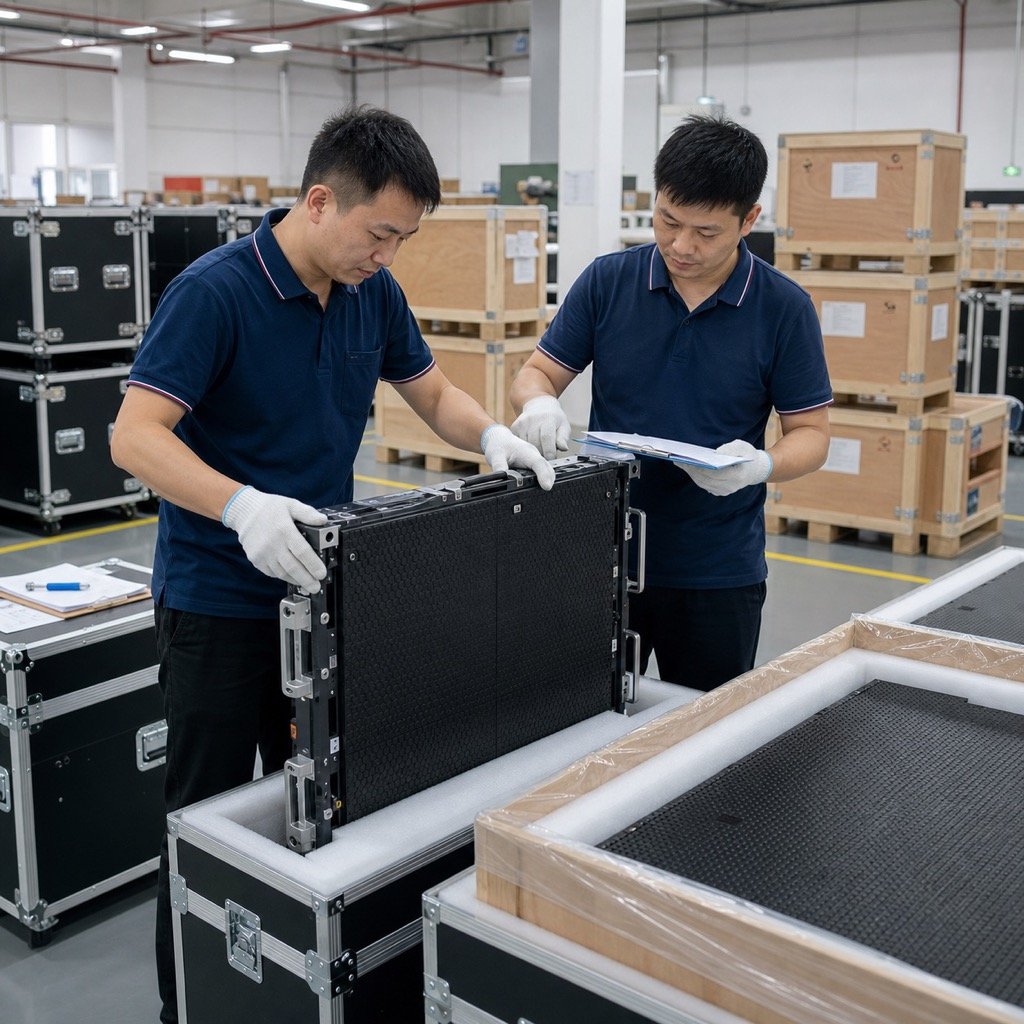
Ask the supplier to show the packing method before shipment. For rental LED screens, flight cases should protect the cabinets during repeated transport. For fixed installation projects, plywood cases and foam protection are common.
Check these packing details:
- Case quantity and case size
- Cabinet placement inside each case
- Foam or corner protection
- Accessories packed separately and clearly
- Packing list matching the order
- Photos of closed cases before pickup
This is not about being picky. It is about avoiding preventable damage and missing parts.
8. Ask for a simple pre-shipment report
You do not need a complicated report. A simple checklist is enough for most projects.
A useful pre-shipment report can include:
- Order model and pixel pitch
- Screen size and cabinet quantity
- Aging test completed
- Solid color test completed
- Video test completed
- Accessories checked
- Spare parts checked
- Packing completed
- Photos or videos attached
If you are buying for a client, this report is also useful for your own communication. You can show your client that the goods were checked before shipment.
Simple message you can send to your supplier
You can copy this message and adjust it for your project:
Before shipment, please send photos and videos showing the LED display aging test, red/green/blue/white test, cabinet close-ups, accessories, spare parts, and final packing. Please also share the packing list and confirm the screen size, cabinet quantity, pixel pitch, and control system.
This one message covers most of the important points without sounding too technical.
FAQ
How long should an LED display aging test be?
It depends on the factory process and project type. The key point is not only the number of hours, but whether the supplier checks stability, color, brightness, and obvious pixel issues before packing.
Should buyers inspect every module by themselves?
No. Most buyers do not need to inspect every LED module personally. But you should ask the supplier for clear test videos, close-up photos, and a packing list so you can review the order before shipment.
Is factory testing more important for outdoor LED displays?
Factory testing is important for both indoor and outdoor LED displays. Outdoor projects also need extra attention to brightness, waterproof design, cabinet protection, power layout, and packing strength.
What if I find a problem in the test video?
Take a screenshot, mark the area, and ask the supplier to recheck it before packing. It is much easier to fix a module, cable, or configuration issue before shipment than after installation.
Can Mirun Hailian provide pre-shipment photos or videos?
Yes. If you send your project requirements through our contact page, we can discuss the LED display configuration, production checks, packing details, and shipment support for your order.
Final thought
A pre-shipment quality check does not need to be complicated. The goal is simple: confirm the screen, confirm the accessories, confirm the packing, and reduce surprises after delivery.
If you are still planning the project, it may help to compare indoor LED display, outdoor LED display, rental LED display, and LED video wall options before finalizing the order.
Need help choosing the right LED display?
Tell us your installation scene, screen size, pixel pitch target and timeline. Mirun Hailian can help match the right product configuration.