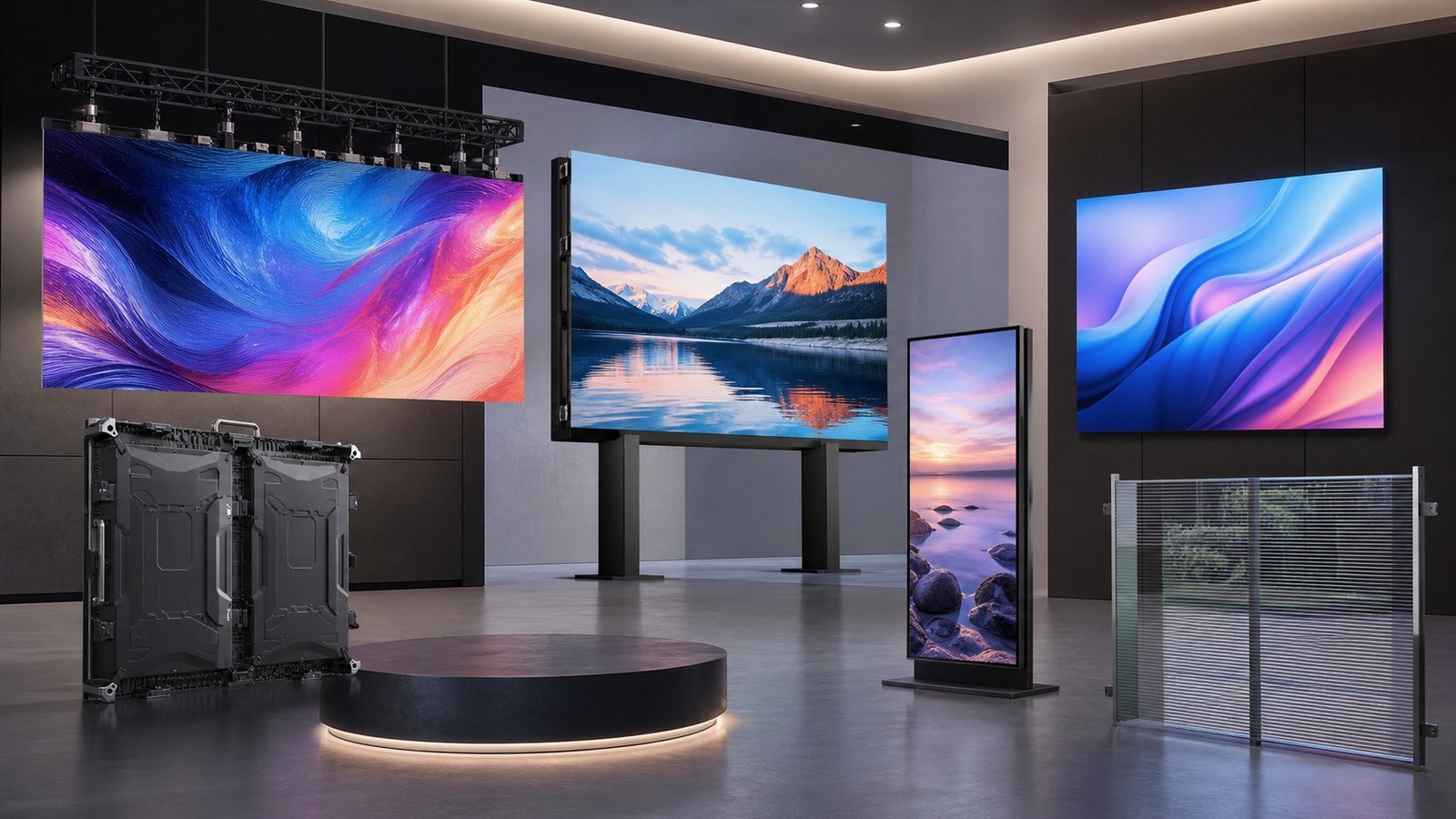
A cheap LED display quote can feel like a win at first. The price per square meter looks lower, the supplier replies fast, and the spreadsheet makes the project seem easier to approve.
Then the real questions start showing up. Does that quote include the control system? What about spare parts? Is the packing good enough for overseas shipping? Are the LED modules from the same batch? Who helps when the local installer has a wiring question?
If you are a B2B buyer comparing LED display suppliers, the lowest quote is not always the lowest cost. This guide breaks down the hidden items that can turn a “great deal” into a project headache. No scare tactics here, just practical buying advice from the factory side.
Start with the full LED display quote, not the headline price
Most buyers naturally look at the price per square meter first. That is useful, but it is only one part of the real cost. Two LED display quotes can have the same screen size and pixel pitch, but very different configurations.
Before you compare prices, ask each supplier to list the complete package. A serious quote should show the LED cabinets, modules, power supplies, receiving cards, control system, video processor if needed, cables, spare parts, packing, and shipping information.
If one supplier includes spare modules and another does not, those quotes are not equal. If one supplier includes flight cases for rental LED display cabinets and another uses basic cartons, those quotes are not equal either. Cheap gets confusing fast when the scope is unclear.
Check whether the product specs actually match
Here is where many buyers get trapped. Quote A says P3.91 outdoor LED display. Quote B also says P3.91 outdoor LED display. So they must be the same, right?
Not always. Pixel pitch is only the start. You also need to compare brightness, refresh rate, grayscale, cabinet size, cabinet weight, service method, waterproof design, module quality, power supply brand, control system, and recommended viewing distance.
For example, an outdoor LED display with weak brightness may look fine in a factory video but struggle under direct sunlight. A rental LED display with a lighter cabinet may be easier to install, but only if the locks, corners, and structure are strong enough for repeated use.
Ask the supplier to explain why the configuration fits your project. If the answer is only “this is cheaper,” keep digging.
Watch for missing control equipment
Control equipment is one of those items buyers may not think about until the screen is almost ready to run. Depending on the project, you may need sending cards, receiving cards, a video processor, software setup, backup files, or a media player.
If the quote only lists cabinets, ask what equipment is required to make the screen work in the real installation. For a simple indoor display, the setup may be straightforward. For a large outdoor LED billboard, stadium screen, stage LED wall, or command center LED video wall, the control plan matters a lot.
The right question is not just “Is the control system included?” Ask what is included, what is optional, and what the local team needs to prepare.
Do not treat spare parts as an afterthought
Spare parts are not exciting during price negotiation. They become very exciting when a screen goes dark and the replacement part is three weeks away.
For overseas buyers, spare modules, power supplies, receiving cards, cables, connectors, masks, and small accessories can save time and protect uptime. The exact spare parts plan depends on screen size, use case, location, and operating hours.
A rental LED display company may need more modules and cabinet accessories. An outdoor advertising operator may care more about waterproof connectors and power-related parts. A fine pitch indoor LED display may need modules from the same production batch for better visual consistency.
Before choosing the cheapest quote, ask what spare parts are included and what the supplier recommends. A slightly higher quote with the right spare parts can be a better business decision.
Packing can quietly change the real cost
Packing is not just a box. It protects the LED display during trucking, sea freight, air freight, warehouse handling, customs inspection, and final delivery.
For fixed LED display projects, strong wooden cases are often the practical choice. For rental LED displays, flight cases may cost more at the beginning but make handling faster and safer over time. For smaller accessories, clear labels and organized packing can save the installer a lot of frustration.
Ask for packing photos, gross weight, volume, and case quantity before shipment. If a quote looks very cheap, check whether the packing method is strong enough for your shipping route.
Shipping terms can make two quotes look unfairly different
EXW, FOB, CIF, DAP, and door-to-door shipping can all change the total cost. A low product price may not include local trucking, export handling, freight, insurance, import duties, customs clearance, or delivery to the final site.
This does not mean every supplier must quote the same shipping term. It means you should compare them clearly. If one supplier quotes FOB Shenzhen and another quotes DAP Los Angeles, you are not looking at the same cost structure.
For B2B buyers, the cleanest approach is to build a landed cost view: product cost, packing cost, spare parts, shipping, taxes, customs, local delivery, installation support, and possible service costs.
Ask about testing before you pay the balance
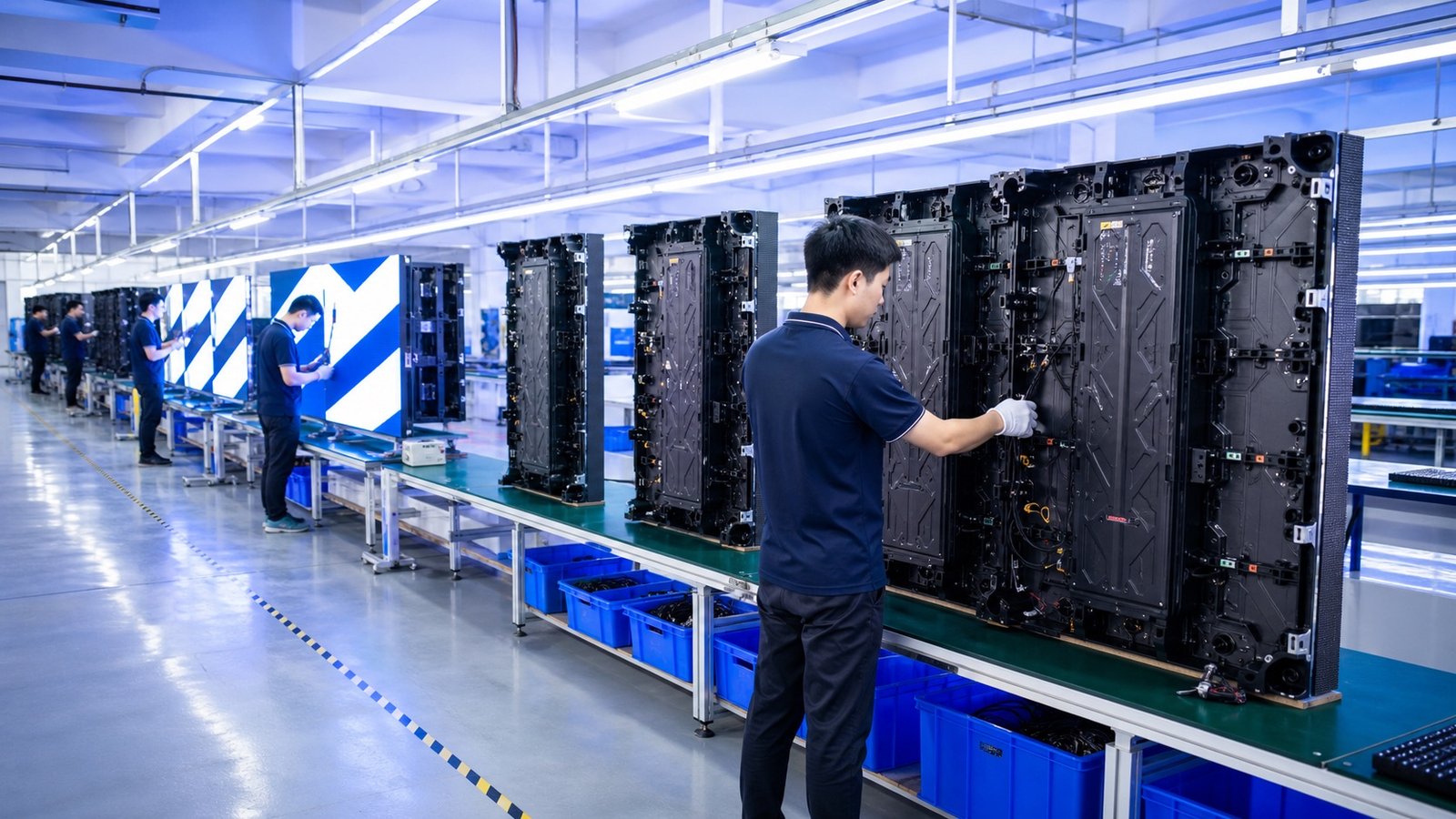
Once the LED display leaves the factory, fixing small mistakes becomes slower and more expensive. That is why pre-shipment testing is a big part of the real value.
Before final payment or shipment, ask your supplier for aging test photos or videos, module inspection, cabinet power-on testing, control system confirmation, packing photos, spare parts photos, and the final packing list.
This is not about being difficult. It is about making sure both sides agree on what is shipping. A good LED display supplier should be comfortable showing the production and testing process.
Cheap support can be expensive later
Support is hard to price in a spreadsheet, but it matters. If your local installer needs drawings, wiring guidance, receiving card files, software setup, or troubleshooting help, slow support can delay the whole project.
Before buying, ask how the supplier supports overseas projects. Do they provide drawings? Can they explain installation details? Will they share configuration files? Is there a clear contact after shipment?
For resellers and contractors, this is especially important. Your customer does not care that the supplier was cheap if the screen cannot be installed on time.
Build a simple comparison sheet
You do not need a complicated procurement system to compare LED display quotes. A simple sheet can help you avoid bad decisions.
Use columns like these:
- Screen size and pixel pitch
- Indoor, outdoor, rental, transparent, or fine pitch use
- Cabinet type, size, weight, and maintenance method
- Brightness, refresh rate, and waterproof rating if outdoor
- Control system and video processor
- Spare parts included
- Packing method and shipping terms
- Production timeline and testing process
- Warranty and support process
- Total landed cost, not just product price
Once you compare quotes this way, the cheapest option may still win. That is fine. The point is to choose it because it is truly the best value, not because important items were missing.
FAQ about LED display quotes
Why are LED display quotes so different?
Quotes can differ because of cabinet design, LED module quality, brightness, refresh rate, control system, spare parts, packing method, warranty, shipping terms, and supplier support. Pixel pitch alone does not make two quotes equal.
Should I choose the lowest LED display quote?
Not automatically. A low quote can be a good deal if the configuration is complete and the supplier can support the project. The risk is choosing a low quote that leaves out control equipment, spare parts, strong packing, testing, or service support.
What should I ask before paying a deposit?
Ask for a full configuration sheet, cabinet layout, control system plan, spare parts list, packing method, production timeline, warranty terms, and shipping details. If possible, confirm drawings before production starts.
Final thought
A good LED display quote should make the project clearer, not more confusing. If a supplier only gives you one attractive number, ask what is behind it. The real cost is the screen, the configuration, the packing, the shipping, the spare parts, the testing, and the support that keeps the project moving.
If you are comparing quotes for an outdoor LED billboard, indoor LED video wall, rental LED display, transparent LED screen, or fine pitch LED display, send us the project details. Mirun Hailian can help you build a practical factory-direct LED display quote that is easy to compare and easier to execute.
Need help choosing the right LED display?
Tell us your installation scene, screen size, pixel pitch target and timeline. Mirun Hailian can help match the right product configuration.