Buying the LED display is only half the project. The other half is the place where that screen has to live.
That sounds obvious, but a lot of B2B projects get delayed because the site was not checked early enough. The screen is ready, the shipping date is close, and then someone realizes the wall structure is different from the drawing, the power cabinet is too far away, the service access is too tight, or the local team cannot unload the cabinets safely.
So before you approve an LED display order, run through a practical installation site checklist. It does not need to be complicated. It just needs to catch the details that can turn a smooth project into a long email chain.
Start with real site photos and measurements
A clean quote starts with a clear site. If you only send a rough screen size, the supplier can quote a product, but they cannot fully understand the installation risk.
Send photos from straight on, from the left and right side, from the ceiling or upper structure if needed, and from the area where the control equipment or power will be placed. Add basic measurements: available width, height, depth, ceiling height, wall thickness if relevant, and service space behind or around the screen.
If the project is outdoors, include photos of the building facade, pole, steel structure, street view, nearby trees, sunlight direction, and maintenance access. These simple details help your LED display supplier recommend the right cabinet, maintenance method, brightness, and packing plan.
Confirm the wall or structure before choosing cabinets
LED cabinets are not just decoration. They have weight, depth, cable routes, locking points, and service requirements. The installation structure needs to support the final screen safely.
Before production starts, confirm what the screen will attach to. Is it a concrete wall, steel frame, aluminum structure, hanging truss, glass facade, or custom bracket? Who is responsible for the steel structure? Is there a local engineer checking load capacity?
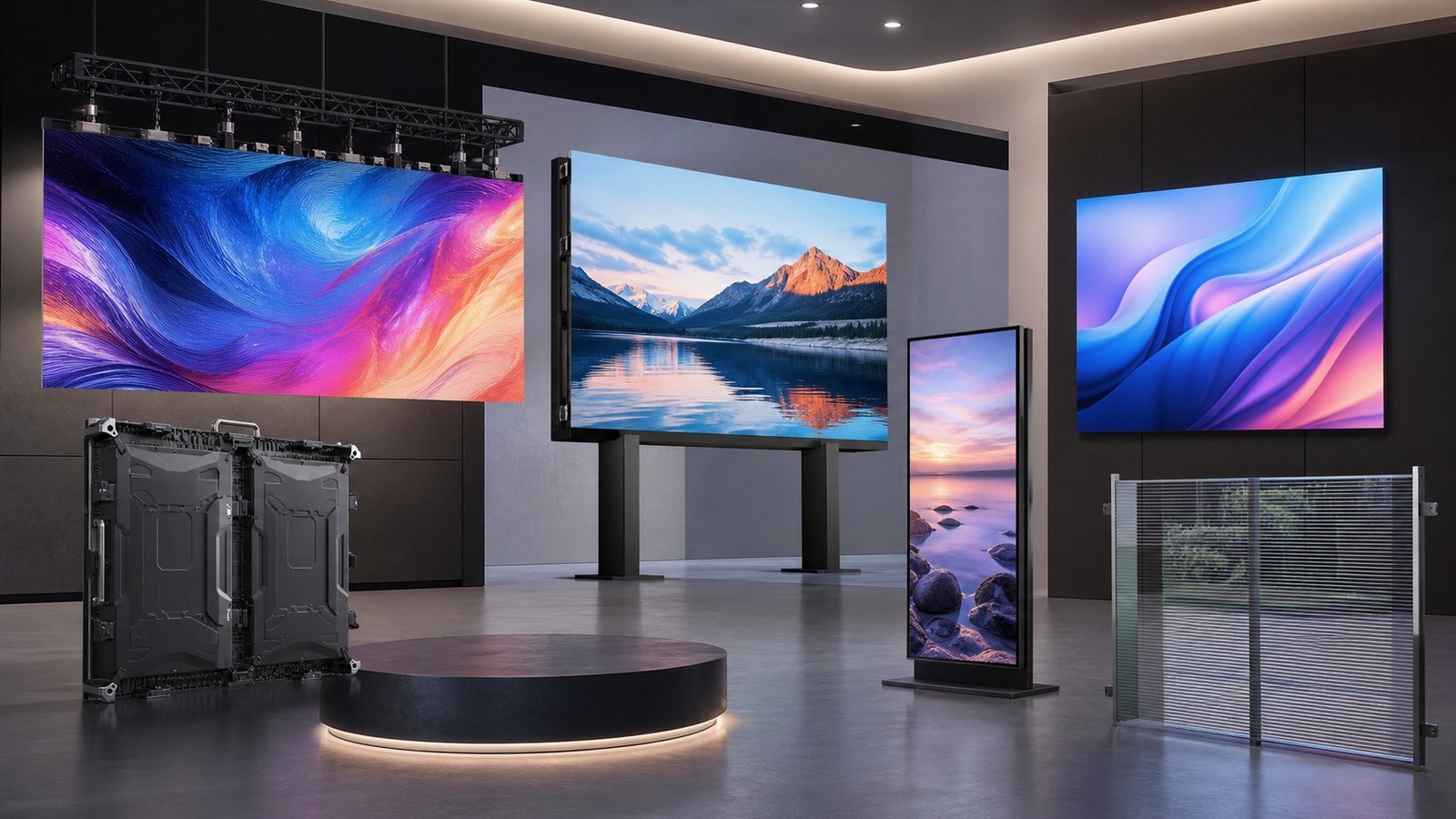
This matters for indoor LED video walls, outdoor LED billboards, rental LED stages, transparent LED displays, and fine pitch LED screens. A cabinet that looks perfect on paper can become difficult if the site has no room for service, no strong mounting points, or a structure that is still changing.
Decide front maintenance or rear maintenance early
Maintenance access is one of the easiest things to miss. If the LED display is mounted directly against a wall, front maintenance may be the right choice. If there is a walkway behind the screen, rear maintenance can work well. For some projects, a combination may be useful.
Ask this before ordering:
- Can technicians reach the modules safely?
- Can power supplies and receiving cards be replaced without removing the whole screen?
- Is there enough space behind the screen?
- Will the screen be too high for normal service work?
- Does the local team understand the maintenance method?
Good maintenance planning saves money later. It also saves everyone from that awful sentence: “We have to take the whole screen down to fix one part.”
Check power before the quote is final
Power is not a small detail. LED displays need stable electrical planning, especially for large outdoor screens, stage displays, shopping mall video walls, and long-hour advertising projects.
Your supplier should help estimate power consumption, but the local electrician needs to confirm the actual site. Check voltage, phase, available capacity, grounding, cable distance, power cabinet position, breaker planning, and whether the local electrical standard has special requirements.
For outdoor LED displays, also think about waterproof power connections, lightning protection, grounding, and safe access after rain or bad weather. A bright screen is great. A bright screen with poor power planning is a problem waiting to happen.
Plan signal and control cable routing
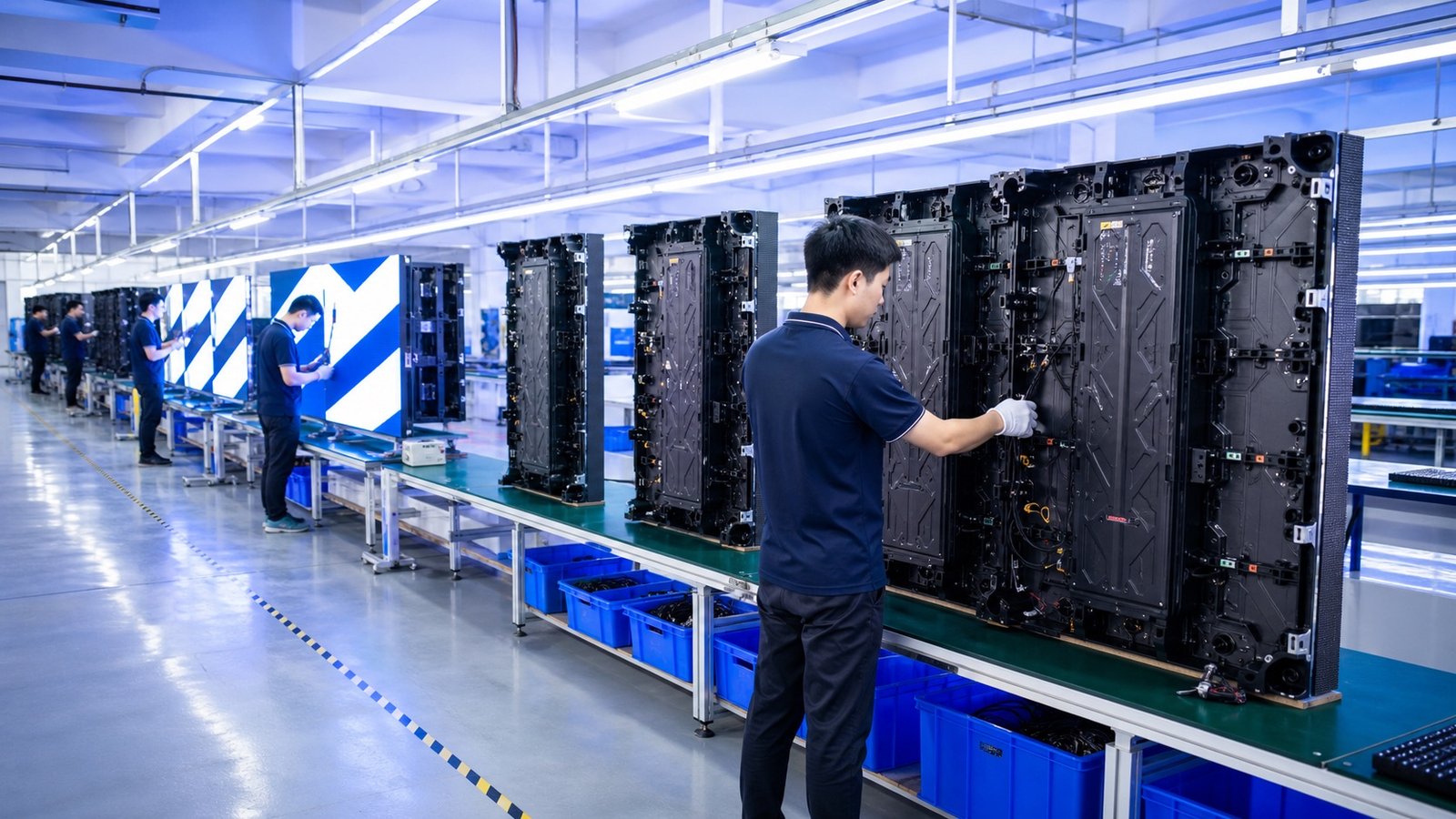
Signal routing should not be decided at the last minute. The control system may need sending equipment, network cables, fiber, video processor connections, media player placement, or backup signal paths.
Ask where the control room is, how far it is from the screen, what signal source will be used, and whether cables can be hidden cleanly. For large venues, command centers, stadiums, churches, retail stores, and event spaces, this can make a big difference in installation speed.
A useful LED display supplier should provide a clear control plan and basic wiring guidance. The goal is simple: when the cabinets arrive, the local installer should not be guessing where everything goes.
Think about heat, airflow, and weather
LED screens create heat. Outdoor environments add sunlight, rain, dust, humidity, and wind. Indoor environments may still have airflow limits if the screen is built into a wall or decorative frame.
Before ordering, ask whether the cabinet design needs natural ventilation, fans, air conditioning support, extra clearance, or special waterproof treatment. For outdoor LED billboards, confirm wind load, cabinet sealing, drainage, and access after storms. For indoor fine pitch LED displays, think about dust control and stable room temperature.
These details are not glamorous, but they help the screen stay reliable after the first week of excitement is over.
Confirm unloading and storage conditions
Many buyers focus on production and forget the day the goods arrive. That day matters.
LED display cabinets are heavy and valuable. The site needs a safe unloading area, enough people or equipment, temporary storage space, and a clear path from the truck to the installation area. If the building has elevators, stairs, narrow doors, or loading dock limits, confirm those before shipment.
This is especially important for rental LED displays, large indoor video walls, and projects inside malls, hotels, airports, schools, churches, and office buildings. A great packing list is not useful if nobody can move the cases into the building.
Lock drawings before production
Drawings are where the project becomes real. Before production starts, confirm the final screen size, cabinet layout, resolution, mounting structure, power route, signal route, control equipment, maintenance access, and packing list.
If something is still changing, say it clearly. It is better to pause for a day than to produce cabinets for a site that is not ready.
For B2B buyers, this is where a factory-direct LED display supplier can really help. You should be able to review the cabinet layout, ask practical installation questions, and confirm what the local team needs to prepare.
Keep one owner for installation details
LED display projects often involve the buyer, supplier, contractor, electrician, structure team, installer, freight forwarder, and sometimes the end user. If everyone talks in separate threads, details get lost.
Try to keep one main project owner on each side. Technical questions can still involve the right people, but final decisions should be confirmed in writing. This keeps the supplier from working with old information and helps the local installer prepare correctly.
Quick checklist before you place the order
Before paying the deposit, make sure these points are clear:
- Final screen width, height, and installation location
- Site photos and basic measurements
- Structure type and load confirmation
- Front or rear maintenance method
- Power supply position, voltage, grounding, and cable route
- Signal source, control room position, and cable distance
- Heat, airflow, waterproofing, and weather requirements
- Unloading, storage, and access conditions
- Final cabinet layout and installation drawings
- Local installer responsibilities and supplier support
FAQ about LED display installation planning
What should I send to get a more accurate LED display quote?
Send the screen size, site photos, measurements, indoor or outdoor use, viewing distance, installation method, power information, target country, and expected delivery date. The more context you provide, the more useful the quote will be.
Do I need front maintenance for my LED display?
If the screen is installed close to a wall or has limited rear access, front maintenance is usually worth considering. If there is a safe service walkway behind the screen, rear maintenance may be practical.
Who should confirm the installation structure?
The local contractor or structural engineer should confirm load capacity and safety. The LED display supplier can provide cabinet size, weight, layout, and installation guidance, but local site safety needs local confirmation.
Final thought
The best LED display projects are not only about choosing the right pixel pitch or getting a good price. They are about making sure the screen, the site, the structure, the power, the control system, and the installer are all working from the same plan.
If you are planning an indoor LED video wall, outdoor LED billboard, rental LED screen, transparent LED display, or fine pitch LED project, send us your site photos and project details. Mirun Hailian can help you review the installation conditions and prepare a practical factory-direct LED display quote.
Need help choosing the right LED display?
Tell us your installation scene, screen size, pixel pitch target and timeline. Mirun Hailian can help match the right product configuration.