A supplier sends a colorful thermal image of an LED wall. One cabinet looks yellow, another looks blue, and the report says the screen passed. Before accepting that conclusion, ask what was measured, under which operating conditions, and against which limit. A persuasive picture can still leave the most important purchasing question unanswered: does this evidence support the installation you are buying?
LED display thermal imaging is useful when the image is tied to a defined measurement method, operating state and acceptance criterion. Read the temperature legend and measurement locations, distinguish surface readings from internal sensors, and check the scope of the test. Colors alone cannot establish component temperature, safe operation or long-term reliability.
This guide is for buyers reviewing inspection and commissioning evidence. It is not an instruction to open energized equipment or perform an electrical inspection. The supplier and responsible site professionals must approve the test method, access arrangements and applicable limits.
Start with the question the report must answer
A thermal report should support a specific decision. You may want to compare similar cabinet positions, investigate a repeatable anomaly, or verify an agreed operating condition after installation. Those are different questions from predicting lifetime or certifying the complete electrical system.
Ask the supplier to state the purpose before collecting pictures. Identify the display, its hardware revision, the installation arrangement and the locations being examined. If the evidence comes from a representative section rather than the complete wall, record that limitation. A small section on an open stand does not reproduce every condition behind a finished enclosure.
The separate LED display heat-dissipation guide addresses cooling design and site inputs. Here, the focus is whether the submitted measurements are understandable and comparable. A report can reveal questions for the cooling team without being a substitute for its design responsibility.
Separate surface, air and sensor temperatures
“Cabinet temperature” is an incomplete label. It could mean a surface seen by an infrared camera, air measured near an intake, or a reading reported by an electronic sensor. Before comparing numbers, establish the measurement type and physical location.
FLIR’s thermal-camera guidance describes thermal measurements as surface temperatures and notes that accuracy depends on factors including distance, ambient conditions and emissivity. Accordingly, an image of a closed cabinet’s exterior is not a direct measurement of an unseen internal component. Ask for the appropriate evidence when the acceptance claim concerns that component.
| Reported value | Location to identify | What not to infer |
|---|---|---|
| Local air temperature | Actual probe position near the installation | Every internal part has the same temperature |
| Infrared surface reading | Visible surface and marked measurement area | The hidden power supply or electronics were directly measured |
| Receiving-card sensor value | Actual card, sensor source and time | All cabinet surfaces or components share that value |
| Component-specific measurement | Manufacturer-defined point and approved method | An unrelated ambient or surface limit applies |
NovaStar’s MRV receiving-card overview, for example, describes monitoring the receiving card’s temperature and voltage. This is a device-specific monitoring scope, not a statement that one value represents every part of an LED cabinet. Confirm the capability and sensor location for the actual model proposed.
Keep these evidence types in separate report fields. Where a comparison between them is useful, let the responsible technical team explain its basis. Do not approve a power-supply condition by comparing a cabinet-surface image with a datasheet limit intended for a different measurement point.
Read the temperature scale before comparing colors
Look for the temperature unit, scale endpoints, palette and marked reading areas. A red region is not automatically a failure, and a blue region is not automatically acceptable. Without the scale and the agreed criterion, the color describes the presentation rather than an acceptance outcome.
FLIR’s camera-operation documentation explains that automatic scaling adjusts image contrast, while manual scaling allows the temperature span and level to be controlled. Consequently, matching colors in two separately scaled images do not establish matching temperatures. For comparison, request numerical readings and clearly documented scales.
Suppose two reports show different color patterns but were exported using different scale endpoints. That is a report-review example, not a measured LED result. The buyer should request a comparable presentation or the underlying readings before concluding that one installation runs hotter.
Also identify what a highlighted spot means: a selected location, an area maximum or another measurement tool. A marked maximum should be traceable to the surface it covers. Cropping away the legend or cabinet context makes a slide look cleaner but can remove information needed to evaluate it.
Treat reflective surfaces as a measurement limitation
A cabinet may place coated panels beside exposed metal brackets, latches or fasteners. Do not assume that a single surface setting makes every material in that image equally suitable for quantitative comparison. Have the inspector identify the measured finish and explain the method used.
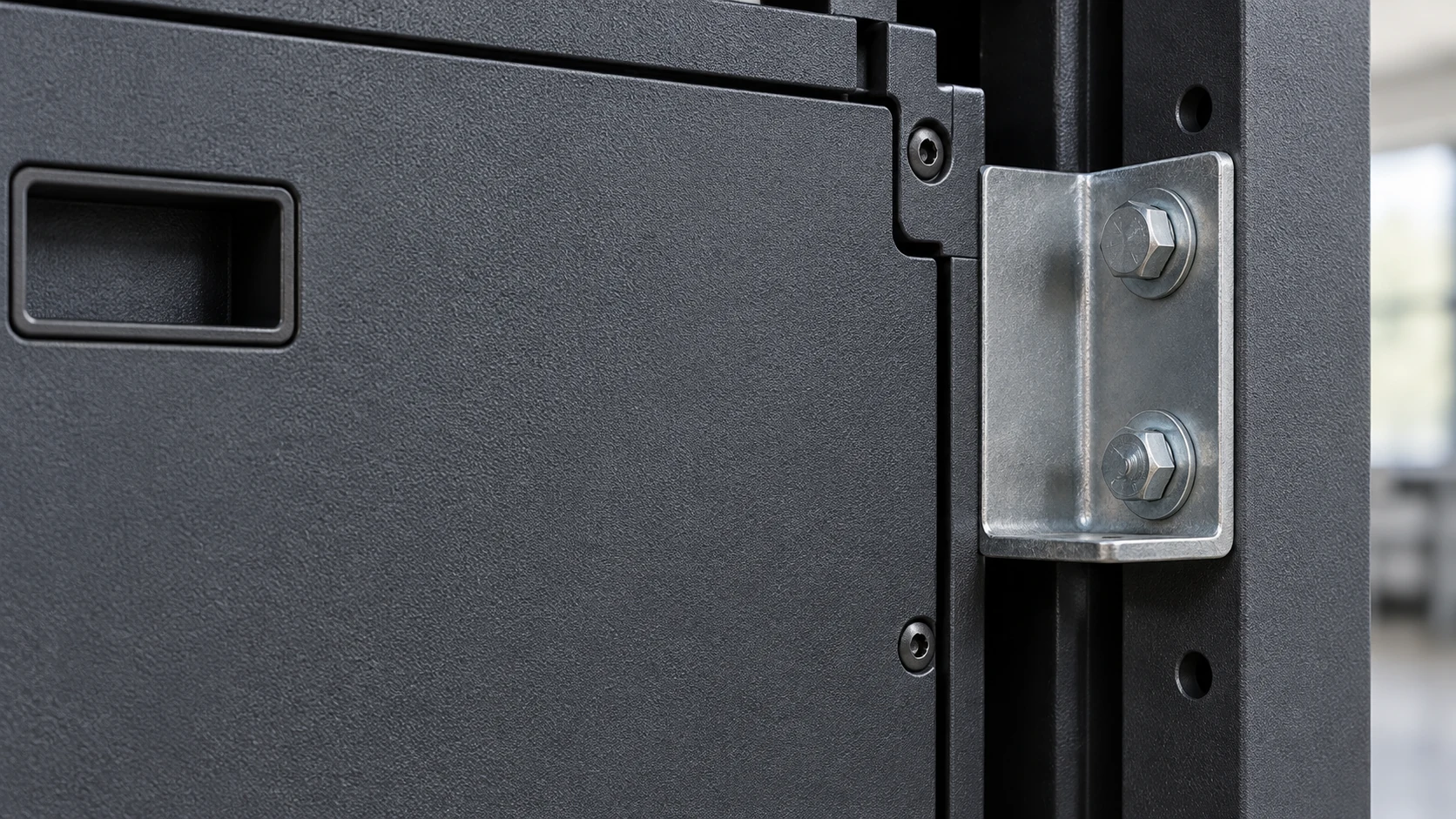
FLIR’s operation documentation also explains the role of emissivity and compensation for reflected radiation. Reflective surfaces therefore need particular care in interpretation. An apparent hot region on shiny hardware should be investigated with a suitable method rather than immediately classified as a defective component.
The useful purchasing question is: “How did you establish that this reading belongs to the target surface, and what limitations remain?” Ask for the relevant measurement parameters and the inspector’s explanation. The buyer does not need to select a universal emissivity value or turn a material name into a guaranteed camera setting.
Do not alter coatings, attach material to energized equipment, or remove a cover merely to improve a photograph. Any additional access or measurement preparation belongs to an approved procedure. If a surface cannot support a reliable reading with the chosen method, state that limitation and obtain another appropriate form of evidence.
Keep operating conditions attached to each image
A report should identify the screen content or approved test pattern, brightness setting, elapsed operation and cooling state. Where available and relevant, include the measured electrical load with its measurement scope. A controller brightness percentage alone is not a complete description of how the display was operating.
Record local environmental conditions and the installation configuration: enclosure state, ventilation arrangement, nearby heat sources and relevant sun exposure for an outdoor project. Note whether the photograph was taken at the factory or at the finished site. Avoid treating a comfortably cooled test bay as evidence for an untested enclosure or operating season.
Agree with the supplier how the observation period and stable-condition criterion will be determined. There is no useful universal “run it for this many hours” rule without a defined installation and method. Preserve timed observations where the acceptance question involves behavior over a duty cycle; one attractive end-of-test image cannot show the preceding trend.
If the report uses a different content package or operating profile from the project, retain the distinction. The pre-shipment quality-check guide helps place the thermal evidence within the broader inspection scope. Factory acceptance and site acceptance answer related but different questions.
Compare repeatable locations, not anonymous hot spots
Give each observation a position that another person can find. Pair the thermal image with a normal photograph or location drawing and identify the cabinet row, column and measured area. Keep the cabinet identity alongside that position if equipment may be moved or replaced.
Use comparable locations and operating states when reviewing repeated observations. Ask the inspector to document camera position, distance, viewing direction and any limitation affecting the target. If these change between reports, an unexplained difference deserves clarification before it becomes a purchasing verdict.
A view of one selected cabinet does not establish uniform behavior across the wall. Agree which positions are included, why those locations were chosen and what remains outside the survey. Give unusual observations their own follow-up record rather than presenting only the most favorable image.
Connect the report to the LED display traceability records. After a repair, identify the changed part, the date, the relevant configuration and whether repeat observation is required. A position map without equipment history can leave a later reviewer comparing different assemblies as though nothing changed.
Turn anomalies into qualified follow-up
A thermal difference is a reason to ask a structured question, not proof of one particular fault. Separate measurement limitations from equipment or installation concerns. The responsible inspector should determine whether the observation needs another measurement, a review of operating conditions or a qualified service investigation.
Set acceptance criteria before the test. Identify the applicable manufacturer information, measurement point, operating conditions, uncertainty where relevant and the person authorized to interpret the result. An ambient operating range, a component-specific limit and a project alarm threshold are not interchangeable labels.
If the system reports temperature alarms, record the sensor source and approved response. The remote-monitoring guide addresses ownership of those operating messages. A thermal survey does not by itself prove alarm delivery or the operator’s response procedure.
Keep unresolved findings visible. Describe the observation, assigned owner, corrective action where approved and conditions for rechecking. A revised report should show what changed, not simply replace the earlier picture with a more reassuring palette. Follow the site’s safe-response procedure if damage or abnormal operation is suspected; do not continue an inspection to obtain a better image.
Specify the report deliverables before ordering
Ask the quotation or inspection plan to include a usable evidence package, not only a promise that a thermal camera will be present. The package should identify:
- The tested equipment and installation scope, including excluded areas.
- The operating profile, environment, observation times and cooling state.
- The camera or instrument identity, relevant verification information and measurement parameters.
- Images with legends, marked measurement areas and matching location references.
- The acceptance basis, findings, limitations and responsible reviewer.
- Approved follow-up, retest conditions and the retained source files where the instrument supports them.
Agree whether editable measurement data will be retained or only a rendered image is available. Do not assume an ordinary screenshot contains the information needed for later quantitative review. Define file access and retention with the supplier, without demanding a proprietary format that the selected instrument cannot produce.
Questions buyers often ask
Can a thermal image prove the LED wall will never overheat?
No. It documents the included observations under stated conditions. It does not cover every future environment, blocked ventilation path, operating profile or equipment change. Match its scope to the agreed acceptance question and retain the limitations.
Should buyers reject every cabinet that looks red?
No. Review the numeric scale, measurement area, method and applicable criterion. A color alone is not a pass or fail. An unexplained observation should receive qualified follow-up rather than being accepted or rejected on appearance.
Must the buyer purchase a thermal camera to accept a report?
Not necessarily. The buyer can require a competent inspector, an approved method and a reviewable evidence package. Owning the instrument is different from establishing that its measurements support the project’s acceptance claim.
Make LED display thermal imaging useful at handover
Good LED display thermal imaging connects a visible observation to the right location, operating condition and decision. Ask for interpretable measurements, not a reassuring color. Keep surface readings, sensor values and acceptance limits distinct, then retain the evidence so a later inspection can be compared fairly.
For a discussion with Mirun, provide the screen application, installation drawing, enclosure and cooling arrangement, operating profile and the thermal-report question you need answered. Add the proposed inspection scope, review responsibilities and handover requirements. Send your LED display inspection brief so equipment and site responsibilities can be considered together.
Need help choosing the right LED display?
Tell us your installation scene, screen size, pixel pitch target and timeline. Mirun Hailian can help match the right product configuration.