Your LED display can pass every factory test and still arrive with bent cabinet corners, cracked modules, loose cables, or moisture inside the case. That is the frustrating part of international buying: quality control does not stop when production ends. Packaging, loading, and receiving checks are part of the product decision too. For B2B buyers, a few clear packaging requirements before pickup can prevent expensive surprises after the shipment crosses an ocean.
Why LED display packaging deserves its own checklist
LED cabinets are rigid, but their corners, connectors, modules, and internal electronics still need protection from impact, vibration, pressure, dust, and moisture. A case that looks strong from the outside may still allow the cabinet to move inside. That movement is often where damage starts.
Packaging should be reviewed with the same attention you give the LED display pre-shipment quality check. The screen should be tested first, protected second, documented third, and loaded in a way that preserves the work already completed.
1. Match the case to the shipping route and project
There is no single best package for every order. Start with how the display will move and what happens after delivery.
| Packaging type | Typical fit | Questions to ask |
|---|---|---|
| Flight case | Rental screens, repeated transport, event projects | Are the wheels, handles, latches, dividers, and foam designed for the loaded weight? |
| Plywood crate | Fixed installations and one-way international shipping | Is the cabinet immobilized, protected from the crate walls, and easy to unload? |
| Carton with fitted foam | Modules, spare parts, accessories, or small items | Can the carton handle stacking and normal handling without crushing the contents? |
If the screen will tour between venues, a reusable flight case may be part of the operating plan. For a fixed outdoor LED display, a well-built export crate may be more practical. Ask the supplier to include the packaging type, quantity, outside dimensions, and gross weight in the quotation so your freight partner can plan correctly.
2. Check the fit inside the case
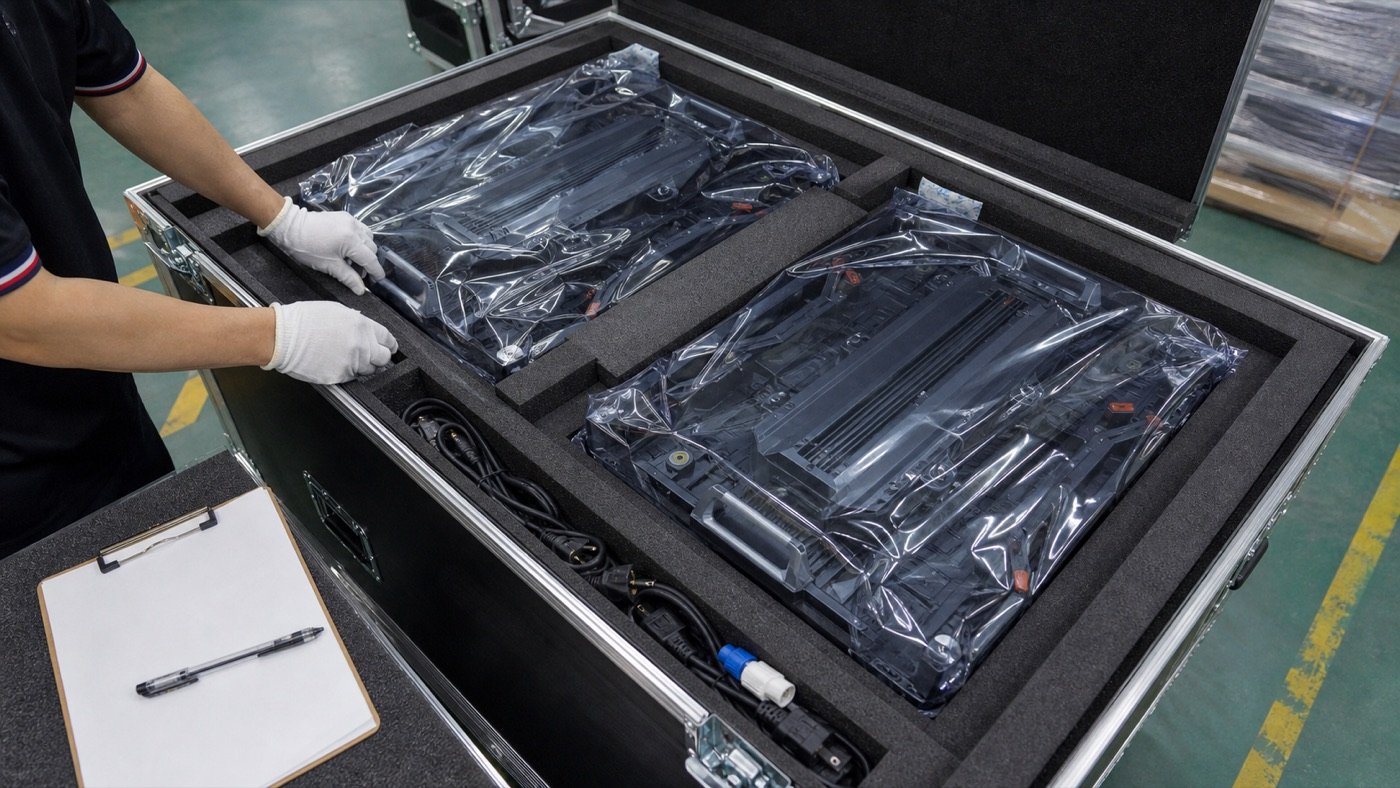
The cabinet should not slide, bounce, or rub against another cabinet. Look for fitted foam or shaped supports at strong contact points. The screen face, cabinet corners, connectors, handles, and protruding hardware should not carry pressure from the lid or neighboring parts.
- Confirm the number of cabinets in each case or crate.
- Check that dividers cannot shift during handling.
- Keep loose metal parts away from LED modules and connectors.
- Protect cabinet corners and any exposed edges.
- Make sure the lid closes without pressing on the product.
3. Protect against moisture, dust, and static
International shipments can pass through humid ports, hot containers, cold warehouses, and wet loading areas. Packaging cannot control every condition, but it should reduce direct exposure. Ask how cabinets, modules, control cards, and spare parts are bagged and sealed. Moisture-control materials should be appropriate for the package volume and expected route.
Electronic spare parts also need suitable anti-static protection. A regular plastic bag may keep dust away without providing the protection an electronic component needs. Ask the supplier to show the actual packing method for receiving cards, sending equipment, power supplies, and spare modules rather than relying on a general promise.
4. Separate accessories and make the package count obvious
Power cables, signal cables, hanging bars, spare modules, tools, controllers, and installation hardware should have assigned locations. Throwing accessories into open spaces can damage the screen and make receiving harder. Use a packing list that connects each item to a case or crate number.
This is also the right moment to confirm the spare-parts plan. Our guide to LED display maintenance costs explains why accessible, matching spares can reduce long-term downtime. The packaging list should show where those parts are stored so the receiving team does not mistake them for missing items.
5. Ask for evidence before the truck arrives
You do not need hundreds of random packing photos. You need a short, organized record that proves the right items were protected and counted before pickup.
- One clear photo of the empty case and fitted protection.
- Photos of cabinets placed inside before the lid closes.
- A view of cables, controllers, spare parts, and hardware compartments.
- Photos of closed cases or crates with visible package numbers.
- A final count of packages, dimensions, gross weight, and total volume.
- Loading photos showing orientation, stacking, and restraint inside the vehicle or container.
These records complement your test videos and QC documents. If you are evaluating a supplier before a large order, use the LED display sample order checklist to see how the supplier handles both testing and delivery details.
6. Plan loading and unloading before shipment
A strong package can still be damaged by poor handling. Confirm the lifting points, forklift access, case orientation, stacking limits, and unloading equipment. Heavy crates should not depend on guesswork at the destination. Share package dimensions and weights with the warehouse, installer, or event team before the shipment arrives.
For installation projects, connect this information to the LED display installation site checklist. Door width, elevator size, loading dock access, floor protection, storage space, and lifting equipment can all affect how safely the display reaches its final position.
7. Inspect the shipment before you sign it off
When the shipment arrives, photograph the packages before moving or opening them. Look for crushed corners, punctures, water marks, broken latches, damaged wheels, shifted crates, or missing package numbers. If anything looks wrong, record it while the delivery condition is still visible.
Open the packages carefully and compare the contents with the packing list. Check cabinet corners, module faces, connectors, handles, and accessories. Then power up a reasonable sample or follow the agreed arrival test plan. Keep the packaging until the first inspection is complete, especially when a claim may need photos of the internal protection.
LED display packaging approval checklist
- Packaging type matches the project and transport plan.
- Case or crate quantity, dimensions, and gross weight are documented.
- Cabinets cannot move or touch each other inside the package.
- Screen faces, corners, connectors, and hardware are protected.
- Electronic parts use appropriate moisture and anti-static protection.
- Accessories and spare parts have separate compartments and package numbers.
- Closed-package and loading photos are provided before pickup.
- Handling, stacking, and unloading instructions are shared with the destination team.
- The receiving team has the packing list and arrival inspection plan.
- Damage reporting contacts and evidence requirements are known in advance.
Packaging red flags buyers should question
Be careful when the quote only says “standard export packing,” the supplier cannot show the inside of the case, or package dimensions appear only after production. Other warning signs include loose accessories beside modules, generic foam that does not fit the cabinet, no moisture plan, and no loading photos.
The goal is not fancy packaging. It is predictable protection that matches the screen, route, and handling plan.
Frequently asked questions
Are flight cases better than wooden crates?
It depends on the project. Flight cases are useful when the display moves repeatedly, while plywood crates may suit a fixed installation and one-way shipment. Internal fit and handling quality matter as much as the outside material.
What packing photos should a buyer request?
Request the empty case, internal protection, cabinets in position, accessory compartments, closed package numbers, and final loading arrangement. The sequence should make the package contents easy to trace.
When should packaging requirements be confirmed?
Confirm them before the purchase order or final quotation. Packaging affects cost, dimensions, freight planning, unloading, storage, and the receiving process.
Make packaging part of the order, not an afterthought
Good packaging is easier to approve when the supplier understands your screen type, shipping method, delivery country, unloading conditions, and whether the cases will be reused. Send those details through our LED display project contact form. We can help organize the product, spare-parts, packaging, and delivery information in one practical quotation.
Need help choosing the right LED display?
Tell us your installation scene, screen size, pixel pitch target and timeline. Mirun Hailian can help match the right product configuration.