Two outdoor LED display quotations can both advertise a salt-spray test and still describe very different evidence. One result may cover a coated metal panel. Another may cover a finished bracket, with different preparation and evaluation. The larger number of hours looks persuasive, but it does not tell a coastal buyer which parts were tested or what condition was accepted afterward.
Review an LED display salt-spray test through five linked items: the identified sample, the named method, the exposure period, the evaluation rule and the relationship to the offered product. Ask for the report, not just the headline. Use the result to support a defined material or finish requirement; do not turn chamber hours into a promised number of years beside the sea.
This guide helps procurement teams and integrators compare corrosion evidence for outdoor cabinets, metal parts and mounting interfaces. It does not prescribe a universal test duration, approve a structural design or claim that Mirun has tested a particular product.
What can an LED display salt-spray test actually prove?
A report can document what happened to specified samples under a stated test environment and evaluation. Its value depends on whether that evidence answers the purchasing requirement. A result for one coating system is not automatically evidence for every cabinet, fastener and site-installed support in the project.
The published scope of ASTM B117-26 describes the apparatus, procedure and conditions for a salt-fog environment. It does not set the specimen, exposure time or interpretation for a particular product. Its significance section also cautions against using stand-alone salt-spray results to predict natural-environment performance. The buyer therefore needs a product-specific requirement alongside the test-method reference.
For an outdoor LED display project, begin with the parts and finishes that need evidence. Keep the question narrow: does the submitted report represent the proposed construction, and does its outcome meet the agreed criterion? That is more useful than asking whether the screen is generally “marine grade.”
First check which salt-spray method was used
“Salt spray” is not a complete method description. The ISO 9227:2022 overview distinguishes neutral salt spray (NSS), acetic acid salt spray (AASS) and copper-accelerated acetic acid salt spray (CASS). Its scope does not supply a product’s specimen dimensions, exposure period or result interpretation. Those missing project decisions cannot be filled by citing the standard number alone.
Ask for the exact method, edition, applicable amendments and any declared deviation. Record the actual method used, rather than silently treating an older report as a test to a newer edition. A reference on a quotation should match the report and the accepted purchase specification.
Do not compare two hour counts until the method, sample construction, preparation and evaluation are understood. If they differ, ask the supplier and the responsible technical reviewer whether the evidence is comparable for this requirement. Do not create a conversion factor between test methods.
Was the sample a panel, a part or the assembled cabinet?
This is often the most important page in the corrosion test report. Identify the substrate, finish, part revision and sample condition. Was it a flat coated coupon, a fabricated bracket, a cabinet panel or a larger assembly? Were edges, holes, joints and fasteners included, or was the evaluated area limited to a prepared surface?
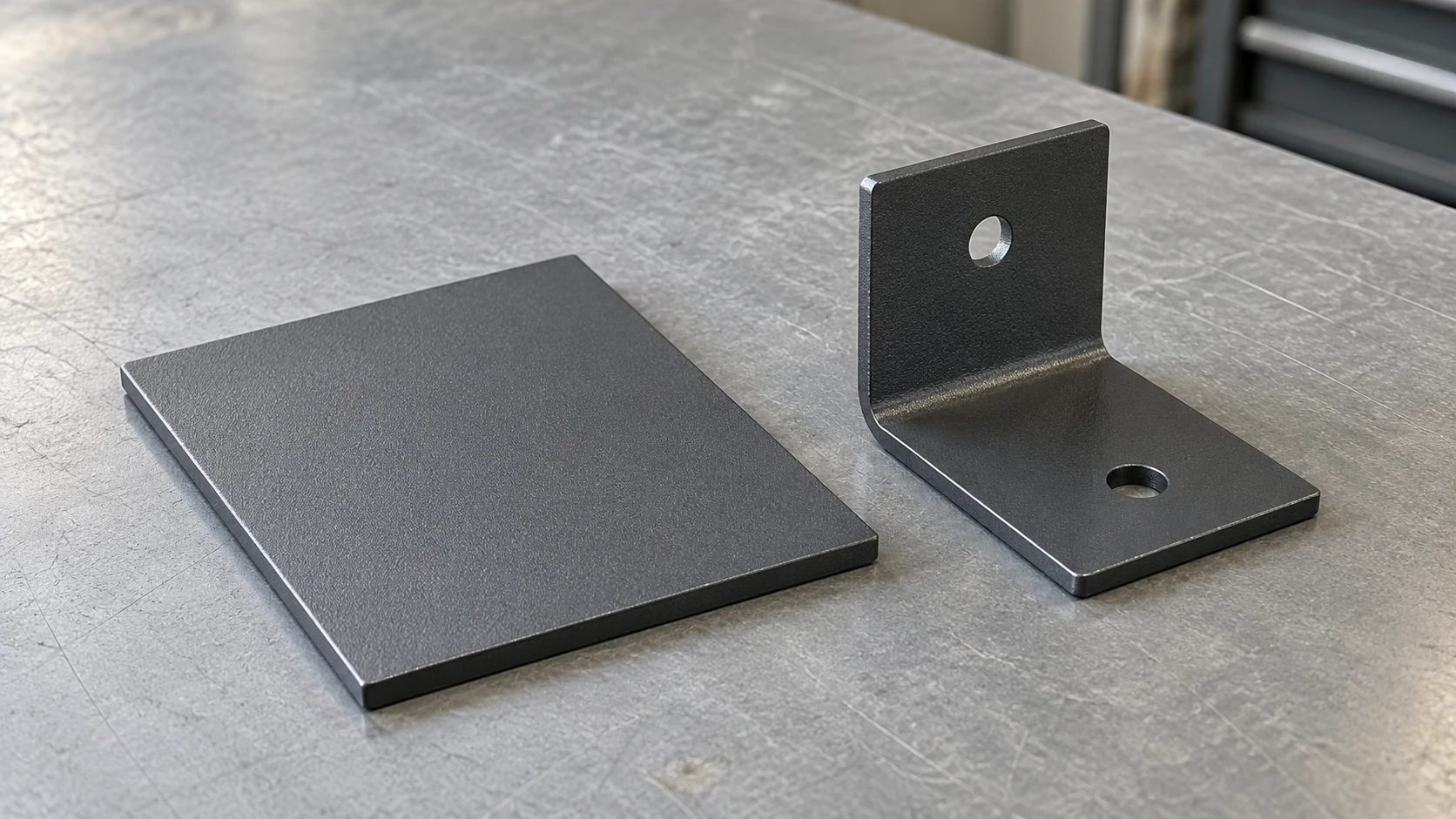
A simple panel may answer a question about a particular finish, but it does not include every interface in a fabricated assembly. Ask which features the evidence covers and which need a separate review. This is a scope distinction, not a reason to dismiss every coupon test.
Check how the sample was prepared. If a coating was intentionally scribed, if edges were sealed or if selected areas were masked, request the preparation record and the evaluation boundary. These details may be deliberate parts of the test plan. They should not be hidden behind a photograph labeled “passed.”
Then connect the sample to the quotation. Request a part number or controlled description, drawing revision, substrate specification and finish specification. Use photos as a cross-check, not as the only identity record. A similar color does not establish that production parts have the same substrate, preparation and coating system.
Read the outcome before you read the hour count
A duration tells you how long the stated exposure continued. It does not, by itself, define the accepted condition. Ask what was examined after exposure, how it was assessed, when the assessment occurred and which document supplied the limit. The evaluation should be understandable to the person accepting the order.
Separate observations that can matter commercially. Visible staining, coating blistering, corrosion at an edge, changes around a deliberate scribe and the operation of a tested hinge are different findings. A single “no corrosion” sentence may conceal an assessment restricted to one surface or one type of defect. Do not assume a visual assessment includes functional checks unless they are recorded.
| Report item | What the buyer should establish | Open question to resolve |
|---|---|---|
| Sample identity | Exact part, substrate, finish and revision | Does it represent the offered construction? |
| Preparation | Scribe, edge sealing, masking and sample condition | Which areas were deliberately included or excluded? |
| Exposure | Method, period and recorded deviations | Was this the agreed test arrangement? |
| Evaluation | Observed condition and acceptance rule | What does “pass” mean for this purchase? |
| Traceability | Report reference, issuer, dates and sample linkage | Can the supplied parts be linked to the evidence? |
Request the relevant report pages together. The result page without sample identification is incomplete for procurement. The cover page without the observations is equally limited. Where the report is incomplete or unclear, mark the gap for clarification rather than supplying your own interpretation.
How should buyers compare two different quotations?
Consider a hypothetical review. Supplier A submits a report for a flat finish sample. Supplier B submits a report for a fabricated part. The reported exposure periods differ. Neither duration alone settles the decision: the samples may answer different questions, and one may include interfaces absent from the other.
Build a short comparison using the same part and finish requirement. For each offer, state the evidence available, its matching features, its exclusions and the remaining approval needed. Ask for the same missing details from both bidders. If further testing is required, agree the proposed samples and criterion before commissioning it.
Avoid ranking unlike materials by one salt-spray number. ISO’s public overview explicitly limits these methods as a way to rank different materials or predict long-term corrosion resistance. For project selection, ask the responsible reviewer to consider the actual material system, application and supporting evidence, not just the longest exposure in a brochure.
The commercial outcome may be a revised finish specification, a clearer exclusion or an additional representative sample. It should not be an undocumented promise that the screen will last a fixed number of coastal years.
What changes when the LED display is near the coast?
Describe the installation before demanding a test target. For a coastal LED display, provide site photos, local exposure information, the screen’s orientation, sheltered and exposed sides, service access and the proposed support arrangement. Distance from the shoreline is useful context, but do not use it alone as a universal approval threshold.
List who supplies each exposed component. The LED cabinet, its attachment hardware, the supporting steelwork and field-installed accessories may come from different parties. A cabinet supplier’s report should not silently become evidence for the contractor’s separate structure. Ask the responsible specialists to define the material, finish and interface requirements for their scope.
Keep enclosure protection separate. An LED display IP-rating review examines the specified enclosure and its installed condition. A corrosion report answers a different question about tested samples. Neither document should be presented as a substitute for the other or as complete approval of the outdoor installation.
Also record access for inspection and maintenance. A finish requirement that is never checked after transport, installation or service is difficult to manage. Agree who can reach relevant surfaces, what observations should trigger review and where the inspection record is kept.
Carry the accepted finish into production and installation
A successful document review still leaves a practical question: will the supplied parts match the accepted description? Link the approved part and finish specifications to the production record. The LED display traceability guide explains how serial and batch records help connect the installed equipment with controlled information.
During the agreed pre-shipment inspection, compare representative parts with the approved sample and drawings. Record visible coating damage, exposed edges, incorrect hardware or unexplained changes for the supplier to resolve. This is a conformity and condition check; it is not a repeat of a laboratory corrosion test.
Ask the installer to identify operations that may change the accepted condition, such as site drilling, cutting or replacement of hardware. Obtain an approved response for affected parts from the responsible designer or supplier. Do not improvise a paint touch-up, fastener substitution or dissimilar-material interface and assume the original report still covers it.
After handling and installation, retain dated photos of representative interfaces and close any approved exceptions. Keep ongoing care consistent with the LED display cleaning guide. Cleaning chemicals, tools and methods should come from the equipment and finish requirements, not from a generic coastal maintenance recipe.
Put evidence, cost and responsibility into the order
A clear quotation scope names the parts supplied, specified finishes, supporting reports and inspection deliverables. It also assigns any project-specific testing, sample preparation, transport, retesting or laboratory charges. Clarify who reviews the report and which unresolved item can prevent shipment or acceptance.
Do not let a test report silently expand the warranty. Agree separately what condition is covered, what documentation supports a claim and what exclusions or maintenance obligations apply. Use the LED display warranty guide to keep remedy, cost and responsibility distinct from a technical test result.
Before ordering, close these six items:
- Identify the site conditions and all separately supplied exposed components.
- Freeze the part, substrate and finish descriptions represented by the evidence.
- Record the method, edition, preparation, exposure and evaluation boundary.
- Review the actual observations against a written purchase criterion.
- Assign production conformity checks, installation changes and maintenance ownership.
- Resolve report gaps, additional testing costs and warranty terms in the order.
Conclusion: buy a traceable requirement, not a bigger number
An LED display salt-spray test is useful when the sample, method and outcome connect to the parts being purchased. It becomes misleading when an isolated duration is treated as proof of a complete assembly or converted into coastal service life. Approve the evidence boundary, carry the accepted finish into production and keep site responsibilities explicit.
For a project discussion with Mirun, send the installation location and photos, screen dimensions, front and rear exposure, support-supply boundary, required finish documentation, service access and target schedule. Contact the LED display project team to clarify the display-side scope and the evidence your integrator or technical reviewer needs before approving the order.
Buyer FAQs
How many salt-spray hours should an outdoor LED display pass?
There is no universal number supplied by the test-method reference for every LED display. Define the relevant samples, method, preparation and acceptance rule with the responsible reviewer. Then agree the exposure period for that requirement before testing or comparing offers.
Can a buyer rely on a report for an earlier cabinet version?
Ask what changed and whether the tested construction still represents the offered parts. A revised substrate, finish, fabrication detail or interface may affect the evidence boundary. Record the reviewer’s decision and any further verification needed; do not accept or reject the report solely because it is older.
Does a passing finish sample cover mounting hardware from another contractor?
Not automatically. Compare the report’s sample description with the actual hardware and finish specifications. If the contractor’s parts are outside that scope, obtain their required evidence separately and assign responsibility for the installed interface.
Need help choosing the right LED display?
Tell us your installation scene, screen size, pixel pitch target and timeline. Mirun Hailian can help match the right product configuration.