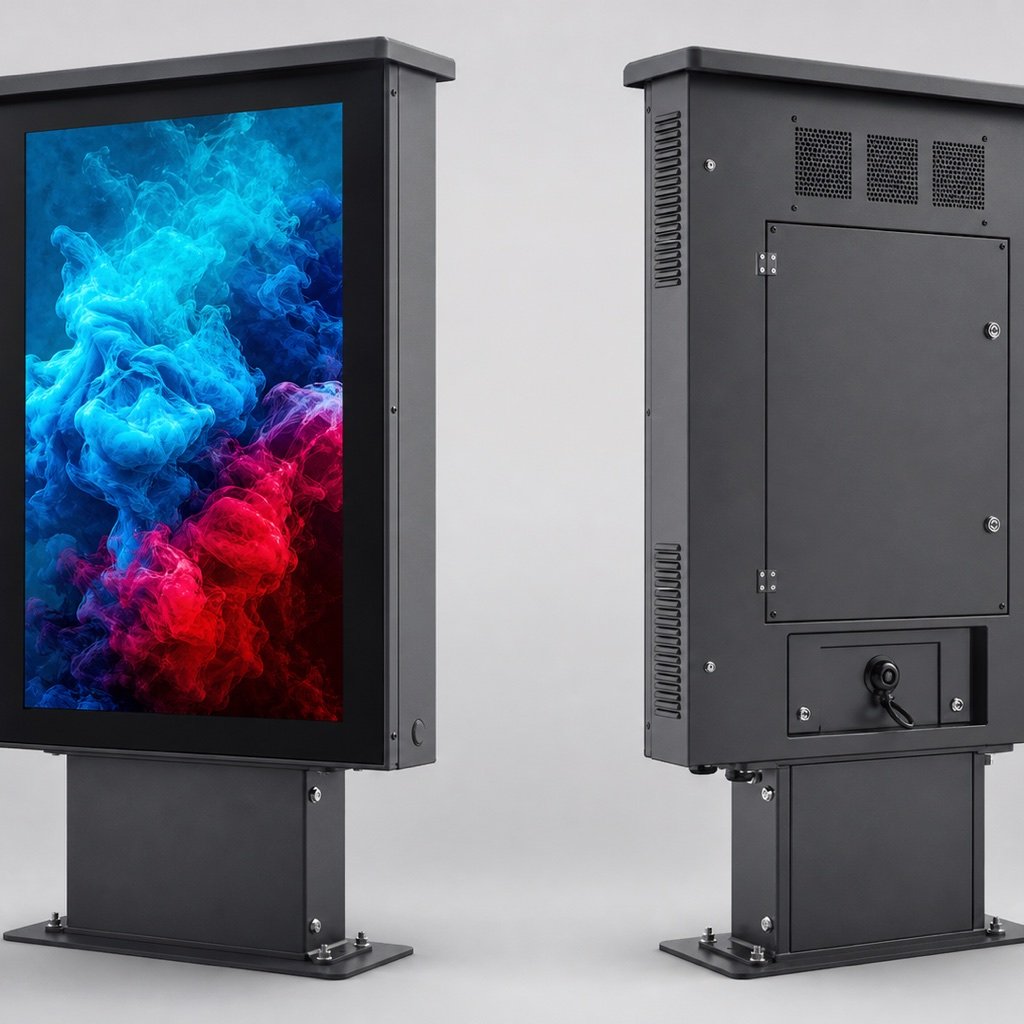
An outdoor kiosk combines a display, enclosure, foundation, power, network, cooling, drainage, and public-space interface in one exposed product. For a B2B buyer, the practical question is not simply whether a supplier offers it. The question is how to define, compare, test, and approve outdoor digital signage kiosk without leaving expensive assumptions for installation or handover.
A complete site brief helps buyers avoid treating the LED panel and the kiosk body as separate decisions. This guide is written for property owners, transport operators, municipalities, and outdoor signage integrators who need a usable RFQ and approval process, not another page of disconnected marketing specifications.
Survey the Full Kiosk Footprint
Measure the installation zone, pedestrian paths, sightlines, nearby roads, utilities, drainage direction, ground condition, access equipment, and maintenance working area. Record shade and direct-sun exposure at different times. Site information changes the cabinet, structure, cabling, service method, and installation labor. A supplier cannot price those details reliably from a screen size and pixel pitch alone.
Match Brightness and Dimming to the Public Space
Provide daytime and nighttime viewing conditions, closest viewers, content type, local operating restrictions, and any automatic brightness-control requirement. Test low-brightness image quality as well as peak output.
More brightness is not automatically better after dark. The operating range should support readability without excessive glare or power use. Ask the supplier to state the assumption in writing and show how the proposed product or workflow addresses it.
Coordinate Enclosure, Cooling, and Drainage
Review cabinet seals, doors, cable entries, filters, fans or cooling equipment, condensation control, sun loading, drainage paths, and service-open conditions. Identify replaceable filters and inspection intervals.
Weather protection and heat management interact. The site should not block designed airflow or trap water around the base. Ask the supplier to state the assumption in writing and show how the proposed product or workflow addresses it.
Define Foundation and Utility Interfaces
Give the local engineer kiosk dimensions, mass, center of gravity, anchor layout, access doors, cable entries, and relevant structural data. Coordinate conduit, isolation, grounding interface, and network handoff.
Foundation and enclosure drawings must use the same revision. A late change in base plate or door swing can conflict with utilities and paving. Ask the supplier to state the assumption in writing and show how the proposed product or workflow addresses it.
Plan Safe Service in a Public Area
Mark the technician standing zone, door swing, module-removal path, temporary barriers, parking or lift access, and isolation procedure. Separate routine cleaning from electrical or internal service.
Maintenance can affect pedestrian flow and site operations. The buyer should know how the kiosk is opened, protected, and returned to service. Ask the supplier to state the assumption in writing and show how the proposed product or workflow addresses it.
Outdoor Kiosk Site Table
Use the following table to keep the outdoor digital signage kiosk discussion specific. Replace generic answers with project values, named documents, and an owner for each open item.
| Buyer check | Why it matters | Evidence to request |
|---|---|---|
| Day and night light | Defines useful brightness range | Site readings and visual test |
| Foundation interface | Controls stability and fit | Engineer-approved anchor drawing |
| Drainage and cooling | Protects outdoor operation | Section drawing and maintenance plan |
| Power and network | Defines utility scope | Conduit and handoff diagram |
| Service zone | Supports safe public-area work | Access drawing and procedure |
A Practical Approval Sequence
Here is the straightforward way to use this information. Add the requirement to the RFQ, send the same supporting drawings and operating details to every bidder, and ask each supplier to answer against the same checklist. If a value is unknown, mark it as an open item instead of letting someone make a silent assumption. That makes the commercial comparison much cleaner and gives engineering a useful exception list.
During Quote Review
Walk through the supplier’s response with purchasing, the technical owner, the installer, and the team that will operate the display. Ask for model-specific evidence rather than a general brochure. When two suppliers propose different approaches, compare the effect on installation labor, access, power, content, spares, training, and downtime. A lower equipment price can disappear quickly if another trade must solve an omitted interface.
Before Production or Shipment
Freeze the accepted answer in the purchase specification, drawing register, and inspection plan. Use a sample, mockup, factory test, or document review that matches the risk of the item. Record settings, test conditions, photos, measurements, file names, and approved exceptions. If the product or method changes, reopen the affected approval instead of assuming the original result still applies.
At Installation and Handover
Repeat the checks that depend on the finished site and the operating team. Confirm labels, access, configuration backups, spare parts, safety steps, and the person who owns each routine task. Then close the requirement with an as-built record that a technician can understand months later. This last step is easy to skip, but it is what turns a successful installation day into a supportable system.
Outdoor Kiosk RFQ Checklist
- Location plan, photos, pedestrian routes, and sightlines
- Daytime, nighttime, shade, and direct-sun conditions
- Kiosk dimensions, screen size, and content orientation
- Foundation, anchor, conduit, drainage, and paving details
- Power, isolation, grounding interface, and network method
- Cooling, filters, condensation, and service-door requirements
- Cleaning, maintenance access, barriers, and response ownership
A checklist works best when it is tied to a date and an approver. Decide which items are needed at quotation, sample review, pre-shipment inspection, installation, and final handover.
Warning Signs to Resolve Before Ordering
- The quote covers the LED panel but not the complete kiosk enclosure
- Foundation and kiosk drawings use different base dimensions
- Cooling and weather-protection assumptions conflict
- Service doors open into an unplanned pedestrian route
One warning sign does not automatically disqualify a supplier, but it should trigger a clearer question, a sample check, or a written exception. Silence is not the same as agreement.
Connect the Requirement to the Full Project
Attach marked drawings and site photos to the order record. The final approval should identify dimensions, interfaces, access limits, responsible parties, and the evidence required before shipment. Useful related resources include the installation site checklist, brightness specification guide, remote-monitoring buyer guide.
Buy the Kiosk as One Site System
A durable outdoor kiosk comes from coordinated display, enclosure, foundation, utility, environmental, and maintenance decisions. Freeze those interfaces before fabrication. A well-defined outdoor digital signage kiosk requirement gives suppliers the same target and gives the buyer a fair way to compare and accept the result.
For a practical recommendation, send Mirun Hailian your site plan, kiosk size, audience positions, light conditions, utilities, foundation details, network policy, and service route. The team can use those inputs to prepare a more relevant configuration and quotation.
Need help choosing the right LED display?
Tell us your installation scene, screen size, pixel pitch target and timeline. Mirun Hailian can help match the right product configuration.